8(a) Certification: Is It Worth It for Your Small Business?
The SBA's 8(a) Business Development Program can open the door to sole-source contracts worth millions. But the application takes months, the eligibility rules are strict, and the program only lasts nine years. Here is an honest look at whether the effort pays off.
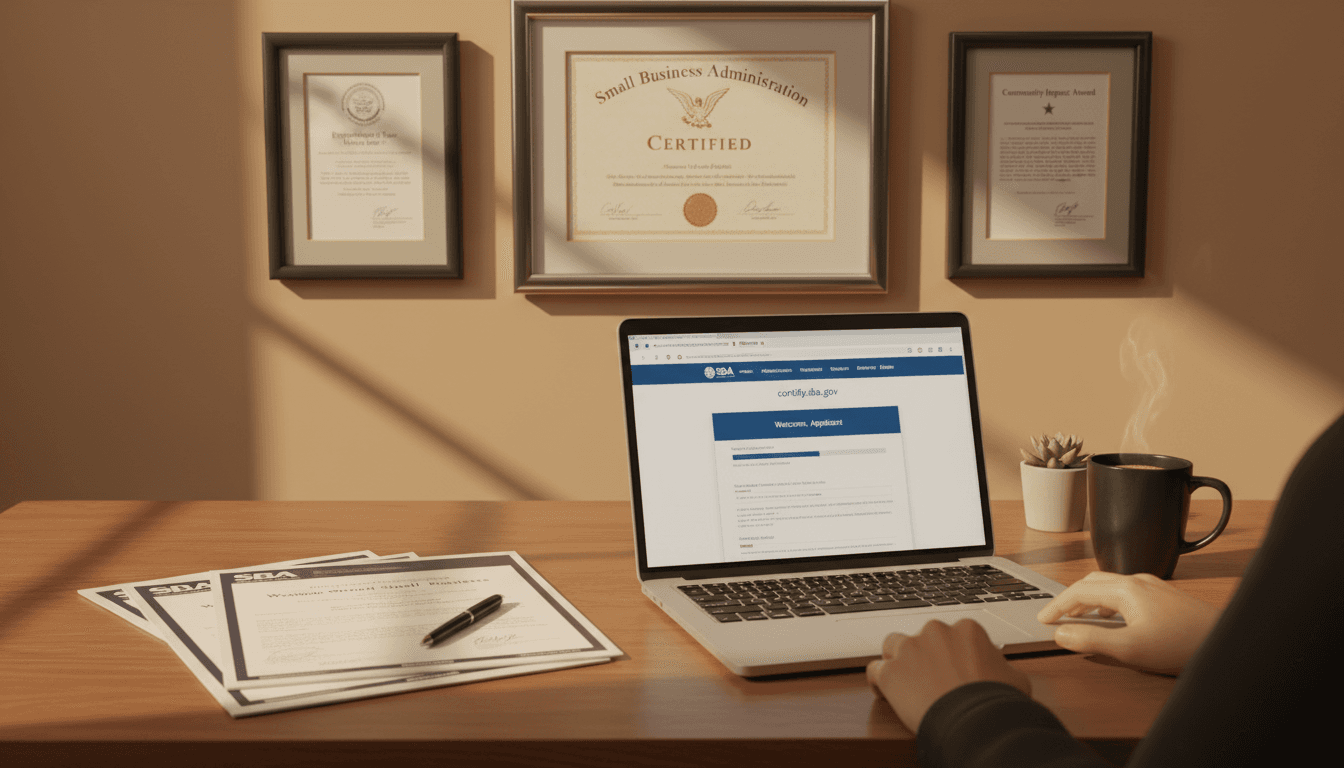
This content is for informational purposes only and does not constitute legal, financial, or professional advice. Government contracting regulations, size standards, and procurement procedures change frequently. Verify all information with official sources (SAM.gov, SBA.gov) and consult with a qualified professional before making business decisions.
What Is the 8(a) Program?
The 8(a) Business Development Program is the SBA's flagship program for helping small, disadvantaged businesses compete for federal contracts. Named after Section 8(a) of the Small Business Act, the program provides participating firms with access to sole-source contracts, set-aside competitions, mentoring, and management assistance over a nine-year term.
The program is divided into two stages: a four-year developmental stage and a five-year transitional stage. During the developmental stage, participants receive more intensive support. During the transitional stage, the expectation is that firms are increasingly competing in the open market alongside their 8(a) work.
Eligibility Requirements
Not every small business qualifies. The SBA evaluates applicants on several criteria:
- Social disadvantage: The owner must be a member of a designated group (Black, Hispanic, Native American, Asian Pacific American, Subcontinent Asian American) or provide a preponderance of evidence of individual social disadvantage.
- Economic disadvantage: The owner's personal net worth must be below $850,000 (excluding the value of their primary residence and the business itself). Adjusted gross income must average $400,000 or less over three years. Total assets must be under $6.5 million.
- Ownership and control: The disadvantaged individual must own at least 51% of the business and control day-to-day management and long-term decision-making.
- Small business status: The firm must qualify as small under the SBA size standard for its primary NAICS code.
- Potential for success: The business must demonstrate it has been in operation for at least two years (this can be waived under certain conditions) and show the ability to perform on contracts.
- Good character: The owner must demonstrate good character — no recent criminal convictions, debarment, or false statements to the government.
Benefits of 8(a) Certification
When the program works, it works extremely well. The benefits are substantial:
Sole-Source Contracts
This is the biggest advantage. Federal agencies can award contracts directly to 8(a) firms without full and open competition — up to $5.5 million for services and $8.5 million for manufacturing. These thresholds were most recently raised effective October 1, 2025, and are adjusted periodically for inflation.
Sole-source awards mean you are not competing with 20 other firms on price. The agency identifies a need, finds a qualified 8(a) firm, and negotiates the contract directly. For many 8(a) participants, sole-source contracts are the foundation of their revenue.
Competitive 8(a) Set-Asides
For contracts above the sole-source thresholds, agencies can restrict competition to only 8(a) firms. This is still a significant advantage — you are competing against a smaller pool of companies, all of whom are certified small businesses.
Joint Ventures and Mentor-Protege
8(a) firms can form joint ventures with larger companies through the SBA's Mentor-Protege program. This allows you to bid on larger contracts by combining your 8(a) status with a mentor's past performance, staff, and resources. The joint venture qualifies as small under the 8(a) program regardless of the mentor's size.
Management and Technical Assistance
The SBA provides business development assistance including training, counseling, and marketing support. The quality varies by SBA district office, but some participants find the mentorship and networking genuinely valuable.
The Real Costs and Challenges
The 8(a) program is not free, and it is not a guarantee of revenue. Here is what most guides do not tell you:
The Application Takes 3-6 Months (or Longer)
The application requires extensive documentation — tax returns, financial statements, personal net worth declarations, resumes, business plans, and more. Many applicants hire a consultant ($5,000-$15,000) to help prepare the application. The SBA's review process itself takes 90 days but frequently extends longer with requests for additional information.
Annual Reviews Are Burdensome
Once certified, you must submit an annual review that includes updated financial statements, tax returns, and a narrative of your business development progress. Miss a deadline or fail to demonstrate adequate progress and the SBA can terminate your participation.
The Nine-Year Clock Is Non-Negotiable
The program lasts exactly nine years. It does not pause if you do not win contracts in Year 1. It does not extend if you had a slow start. Some firms spend two to three years learning the system before winning their first significant contract, which means they only get six or seven productive years in the program.
Sole-Source Awards Are Not Automatic
Having 8(a) certification does not mean agencies will find you and hand you contracts. You still need to market your firm, build relationships with contracting officers, and be registered on the right contract vehicles. Firms that sit back and wait for the phone to ring after certification are consistently disappointed.
Is It Worth It? A Realistic Framework
The answer depends on where your business is today:
8(a) Is Likely Worth It If:
- You are already doing or actively pursuing federal contracting work
- You have at least some past performance on government or commercial contracts
- You have the capacity (or can build it) to perform on $500K-$5.5M contracts
- You are willing to invest 12-18 months in marketing and relationship-building after certification before expecting significant revenue
- You qualify for both social and economic disadvantage criteria
8(a) May Not Be Worth It If:
- You have no interest in or experience with federal contracting
- Your firm has less than $250K in annual revenue and limited staff — you may struggle to perform on the contracts 8(a) unlocks
- You are close to the economic disadvantage thresholds and may age out quickly
- You expect certification alone to generate revenue without active business development effort
- You are in a niche where most federal work is full-and-open rather than set-aside (rare, but it happens in some specialties)
Alternatives to 8(a)
If you do not qualify for 8(a) or decide it is not worth the effort, other set-aside programs may be a better fit:
- Small Business Set-Aside — No special certification needed beyond being registered as small in SAM.gov. The largest volume of set-aside contracts.
- SDVOSB — If you are a service-disabled veteran or majority-owned by one. Self-certification through SBA's VetCert program.
- WOSB/EDWOSB — If you are a woman-owned small business. Certification through SBA or an approved third party.
- HUBZone — If your principal office is in a HUBZone and 35% of your employees live in one. Less competitive but geographic restrictions are real.
How to Find 8(a) Set-Aside Opportunities
If you are 8(a) certified or considering certification, the first step is knowing what is out there. You can search SAM.gov and filter by "8(a) Set-Aside" under the set-aside type. But SAM.gov's interface makes it difficult to combine filters (NAICS + set-aside + geography) effectively.
GovConToday lets you set your NAICS codes and set-aside preferences — including 8(a) — and matches opportunities on your dashboard. If you are building a pipeline of 8(a) opportunities, having them surfaced automatically saves you significant time.
Track 8(a) Set-Aside Opportunities Daily
Get 8(a) set-aside contracts matched to your NAICS codes on your dashboard. Stop searching SAM.gov manually.
Start Free — No Credit Card Required